News:
Unified Voter Register audit – status and outlook before the election campaign
CRTA’s members of the Commission assess that the report due to the National Assembly on 28 October will be a set of partial diagnostic findings, not a completed audit. Conducting a comprehensive, system-level audit capable of establishing the overall accuracy, completeness, and integrity of the UVR is not feasible under current conditions. A meaningful set…
Campaigning without the paperwork
Faced, after a long time, with a challenger that makes the outcome of the election uncertain, the ruling majority has kept the whole of society in a state of nervousness and uncertainty regarding the calling of elections. During that time, a further deterioration of electoral conditions was recorded, along with a deepening of inequality on…
Due to violence by criminals and the unlawful conduct by the police, CRTA’s Election Observation Mission in Mionica has been suspended.
Since the safety of our observers has been seriously endangered, we have decided to abolish the CRTA’s Observation Mission in Mionica and withdraw our observers from all polling stations and mobile teams. We made this decision after a mobile team of CRTA’s female observers in Mionica was attacked by a group of unidentified men. They…
Local elections: CRTA in Mionica at all polling stations; in Negotin and Sečanj with legal and mobile teams
CRTA will be among the citizens voting on November 30 – in Mionica and Negotin at regular local elections, and in Sečanj at extraordinary local elections. In addition to observers, CRTA’s legal teams will also be present, ready to support citizens in cases of pressure or any other violation of their voting rights. In Mionica,…
An audit of the Voter Register is possible, but not under the conditions imposed by the government
Following a broad and public consultative process that involved representatives of both parliamentary and non-parliamentary parties, civil society, the academic community, citizens’ assemblies, and other interested stakeholders, CRTA, taking into account ODIHR’s recommendations, finalized its proposal for the audit of the Unified Voter Register, which could serve as a foundation for revision and as a…
The Next Elections Will Be Held Without the Necessary Audit of the Voter Registry
Everything the authorities have done so far indicates that an independent, effective audit of the voter registry will not be carried out before the next elections. The task will remain necessary to complete under different political circumstances – this was one of the messages from today’s public discussion on problems with the voter registry, held…
Unified Voter Register audit – status and outlook before the election campaign
CRTA’s members of the Commission assess that the report due to the National Assembly on…
Campaigning without the paperwork
Faced, after a long time, with a challenger that makes the outcome of the election…
Due to violence by criminals and the unlawful conduct by the police, CRTA’s Election Observation Mission in Mionica has been suspended.
Since the safety of our observers has been seriously endangered, we have decided to abolish…
Venice Commission should take into account the state of democratic institutions when giving an opinion on constitutional amendments
Civil society organizations drew the attention of the Venice Commission delegation representatives to the fact that, when giving an opinion on the draft constitutional amendments concerning the judiciary, it is necessary to consider the state of democratic institutions, and the political context, having in mind that whether the constitutional changes will indeed ensure the independence of the judiciary depends on these two factors.
Analysis: Measures proposed by the co-facilitators in the EP mediated Inter-Party Dialogue will not ensure conditions for fair and free elections
CRTA analyzed the Measures to Improve the Conduct of the Electoral Process, proposed by the co-facilitators in the course of the Inter-Party Dialogue mediated by the European Parliament, published on 18 September 2021. One segment of the proposed measures comes as a result of a political agreement – these measures constitute temporary solutions, and go beyond the existing legal and institutional framework. Assessing their enforcement will, therefore, require analzying their actual effects in practice, during the observation of the upcoming elections. The following analysis is strictly focused on legal solutions which are in line with the existing legal and institutional framework, and their possible reach and compliance with domestic legislation, as well as with international standards and recommendations by domestic and international observers.
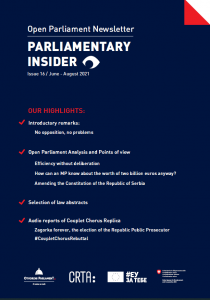
Parliamentary Insider for the period: June – August 2021
The Assembly of Serbia has never worked without a break in June and July, and even at the beginning of August, as it happened this year. Even though, statistically speaking, the Assembly functions great without opposition, the MPs tried hard to remind everyone how bad the previous government was and how absolutely all oppositionists are…

Full Stack Web Developer – PHP and JavaScript – Remote position
For the purposes of maintaining the Open Parliament website as a part of project “Back to Basics – Parliament as a Backbone for the Rule of Law”,`Crta is opening a job position for a colleague developer who would join our IT dev team! We are a group of civil society activists devoted to strengthening democratic…

Svjetlana Gojkovic Stojkovic
Svjetlana is an archaeologist. She gained many years of work experience in various financial and administrative jobs. Svjetlana joined Crta team in June 2021 in the position of financial coordinator. She truly believes that the fight for justice, honesty and empathy can change the world. She is a lover of nature and art, and she prefers…

Katarina Vladulj
She completed her undergraduate studies in 2017 at the Faculty of Security studies, University of Belgrade, and after completing her formal education, she started working in a recognized international law office, where she provided administrative support in legal matters to members of the office for 5 years. In the meantime, it continues to be affected…

Gordana Pavicevic
She has been in social research since the beginning of her career, with occasional efforts to find out challenges in market research. However, it is still more challenging to research social phenomena in Serbia and fight for transparency and responsibility in social life, so after many years of working in agencies as Ipsos and Masmi,…

A year of groupthink in the Parliament and the media
The Serbian political scene has long been characterised by a worrying lack of political pluralism and the collapse of the basic mechanisms that protect democracy. The last parliamentary elections were preceded by a dialogue on improving election conditions, which did not yield results.

Central news stripped of political pluralism
Extremely uneven representation of ruling parties and the opposition – this is the main finding of CRTA’s year long post-election media content analysis of central news on televisions with national coverage: RTS, Pink, Prva, Happy, and B92. Between July 2020 and the end of June 2021, representatives of the ruling majority garnered as much as 93% of time in television programme covering political actors, while the opposition was present in the remaining 7% of time.
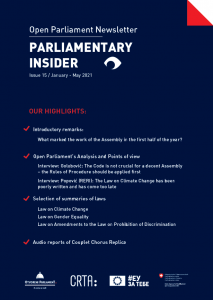
Parliamentary Insider for the period: January – May 2021
In this issue, the Parliamentary Insider brings assessments of the work of the Parliament from January to May 2021. At first glance, from the beginning of the New Year to the end of May, in their addresses, the MPs were trying to correct mistakes that the European Commission had pointed out last year. Sittings were scheduled on time, the MPs had the opportunity to ask questions to the executive, and the plenum was held only on Tuesdays, Thursdays and Fridays. This still did not shroud the fact that it was easy to organise all this in a practically one-party system.
Election Cycles
2026
Local elections year 2026
2025
Local elections year 2025
2024
The Elections for the Belgrade City Assembly were called for June 2, 2024
2023
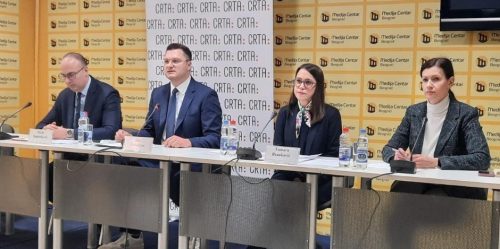
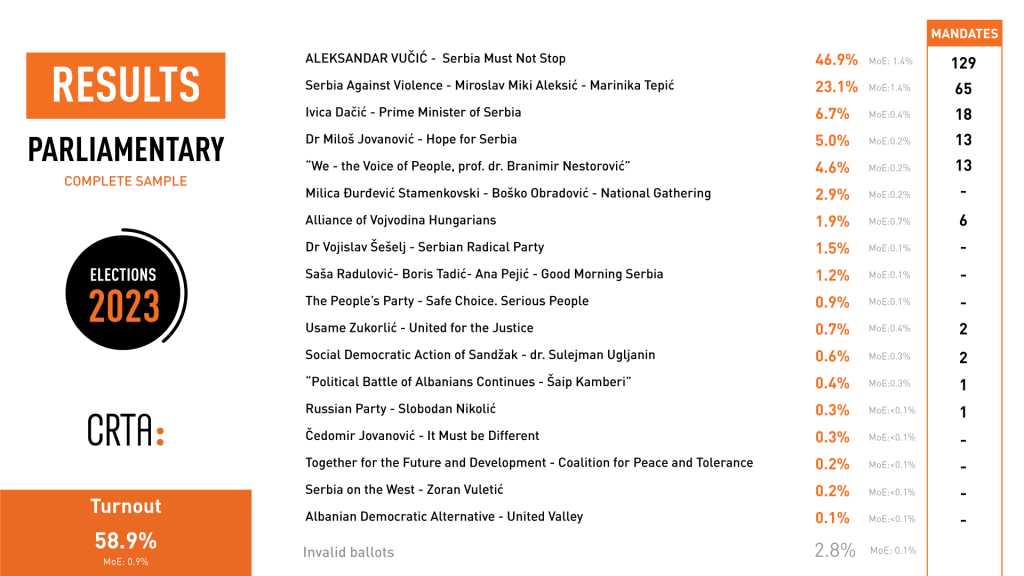
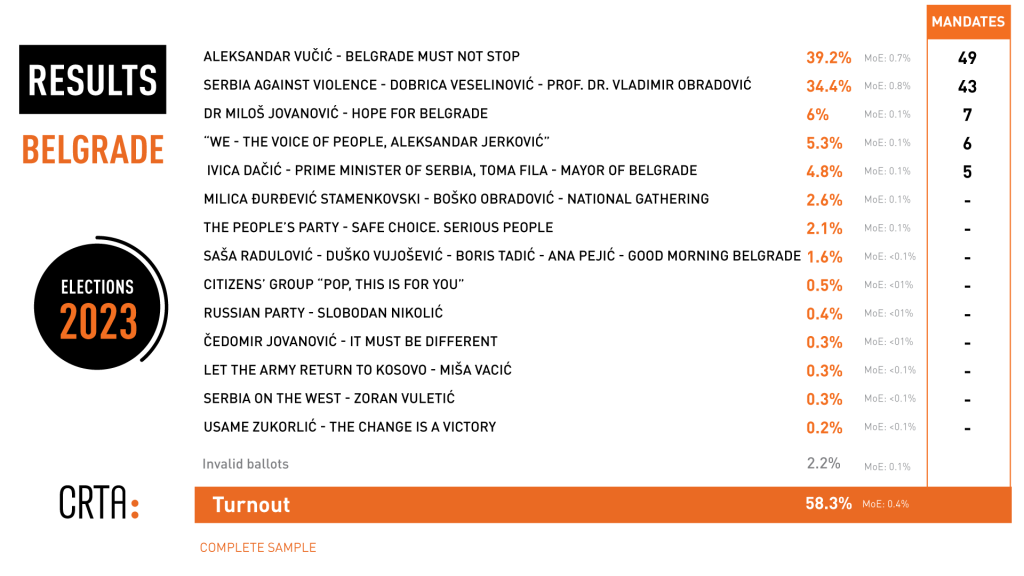
Elections on multiple levels were called for December 17, 2023
2022
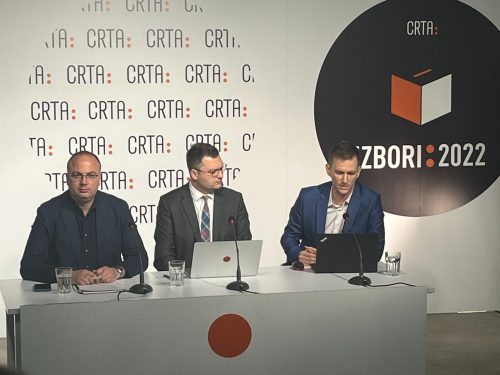
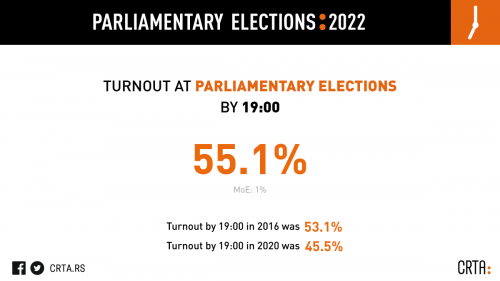
Elections on multiple levels were called for April 3, 2022
2022
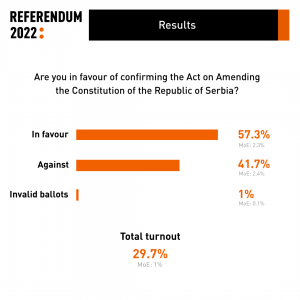
The Referendum to Change the Constitution in the area of judiciary was held on January 16, 2022
2020
The Elections for Members of Parliament were held on June 21, 2020
2018
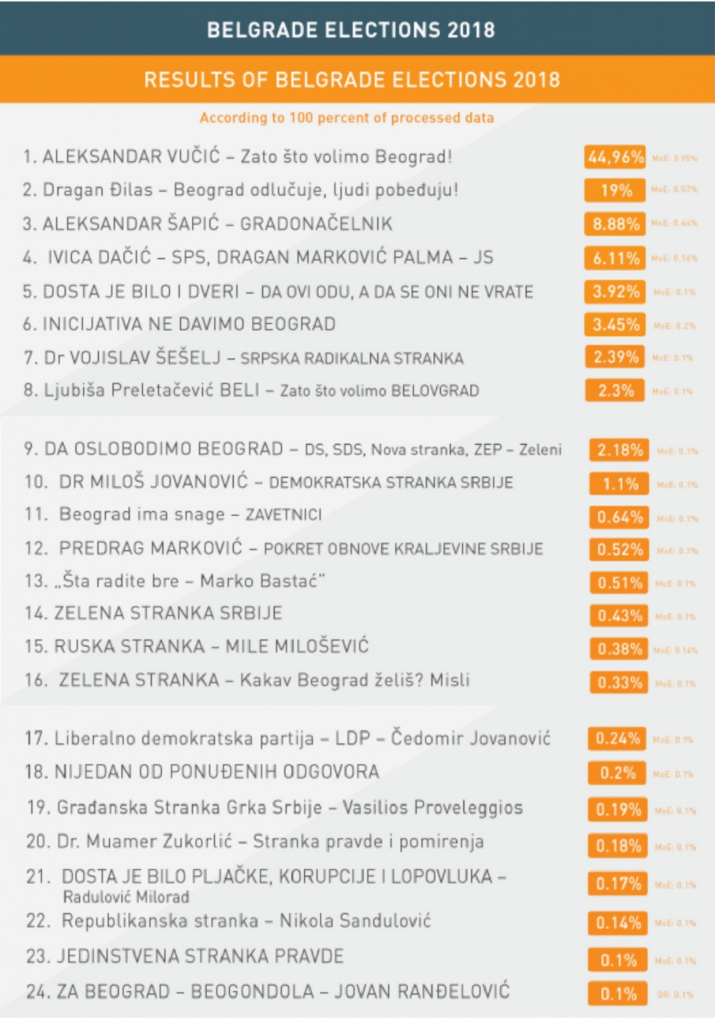
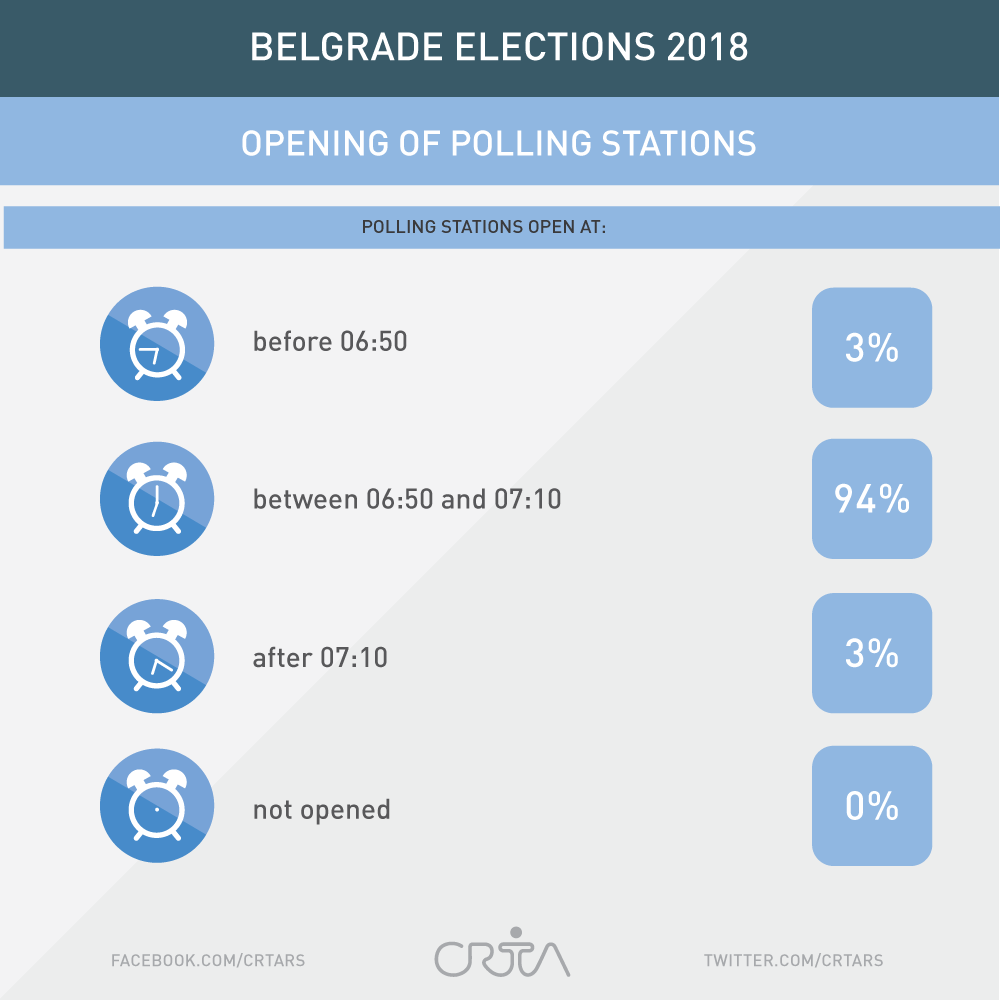
The Elections for the Belgrade City Assembly were held on March 4, 2018
2017
The Elections for the President of the Republic were held on April 2, 2017, across Serbia
2016
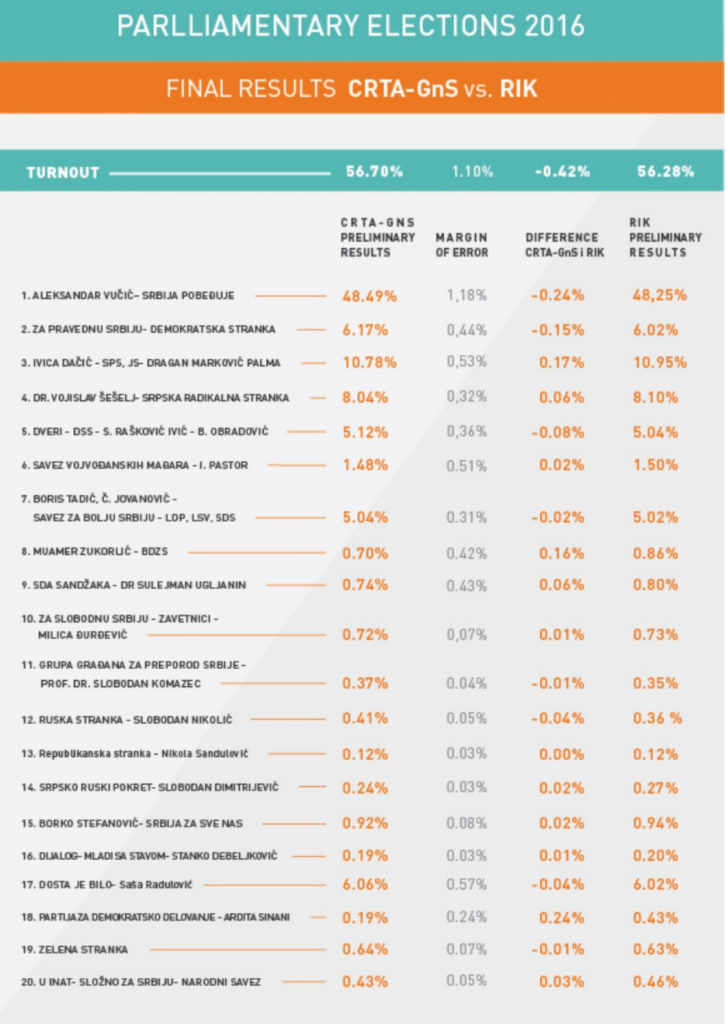
The Elections for Members of Parliament were held on April 24, 2016, along with provincial and local elections
2026
Local elections year 2026
Sorry, we couldn't find any posts. Please try a different search.
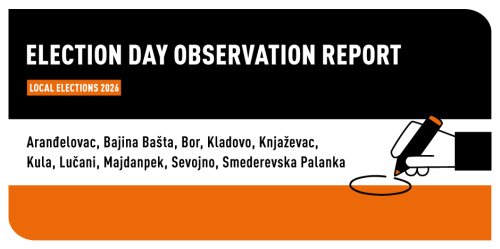
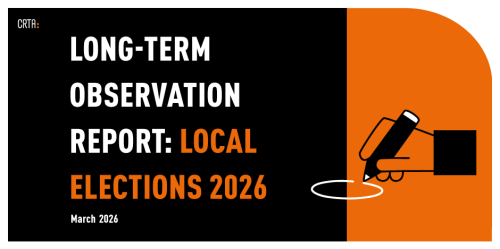
2025
Local elections year 2025

2024
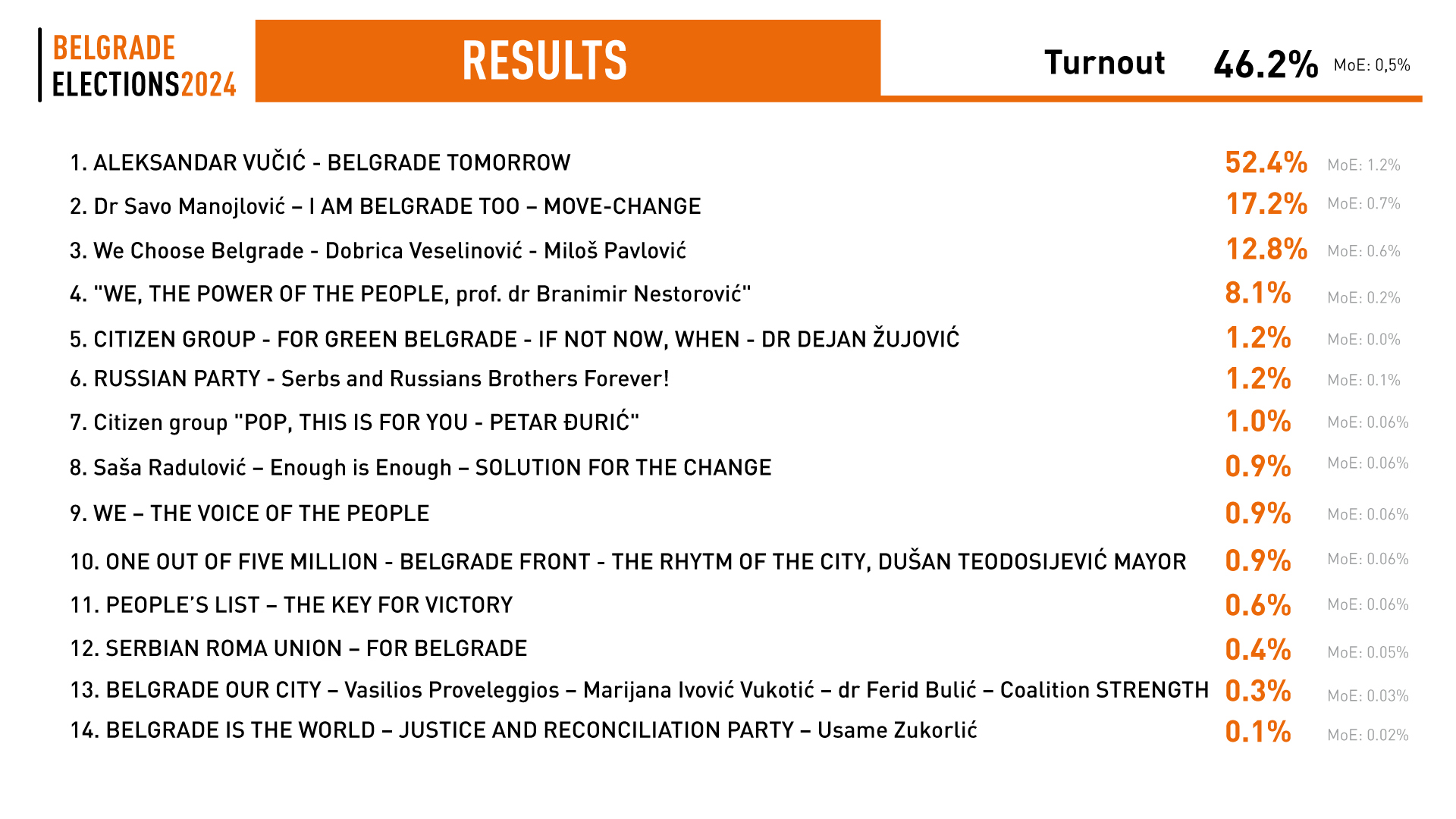
The Elections for the Belgrade City Assembly were called for June 2, 2024


2023
Elections on multiple levels were called for December 17, 2023
2022
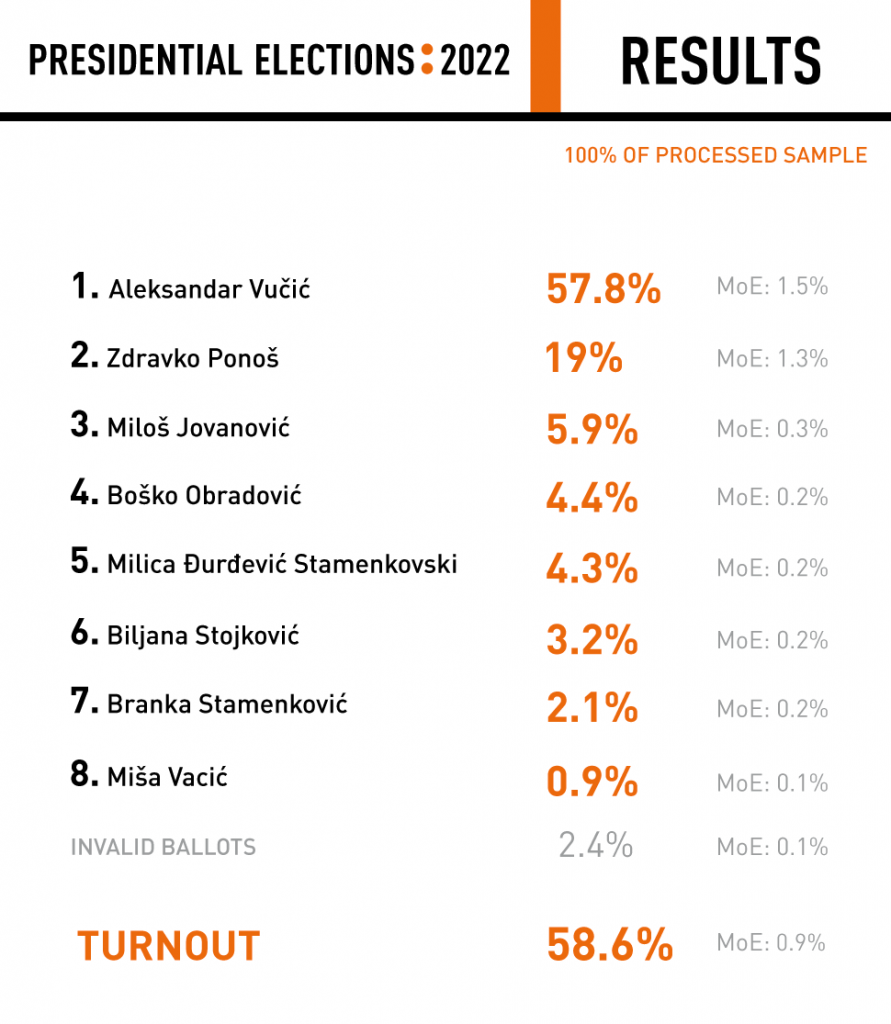
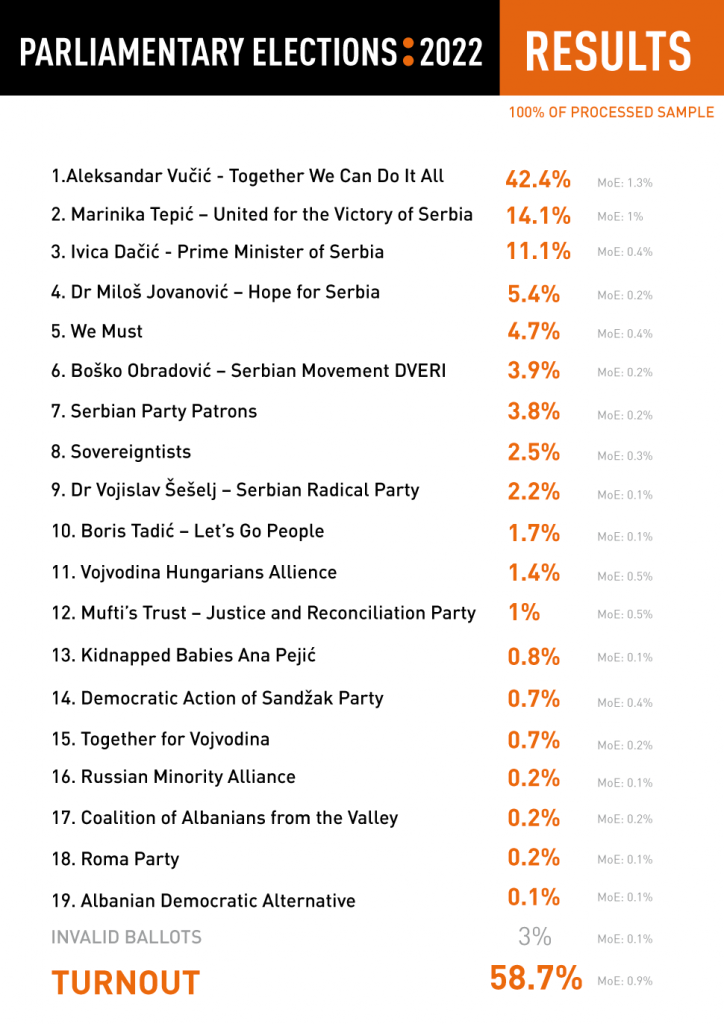
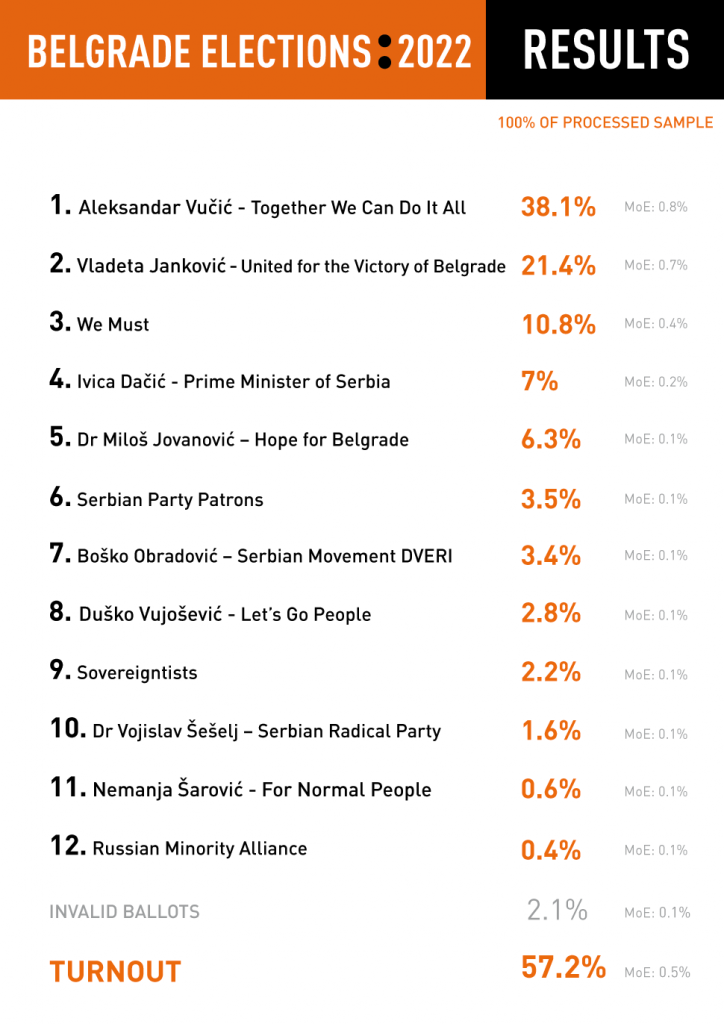
Elections on multiple levels were called for April 3, 2022
2022
The Referendum to Change the Constitution in the area of judiciary was held on January 16, 2022
2020
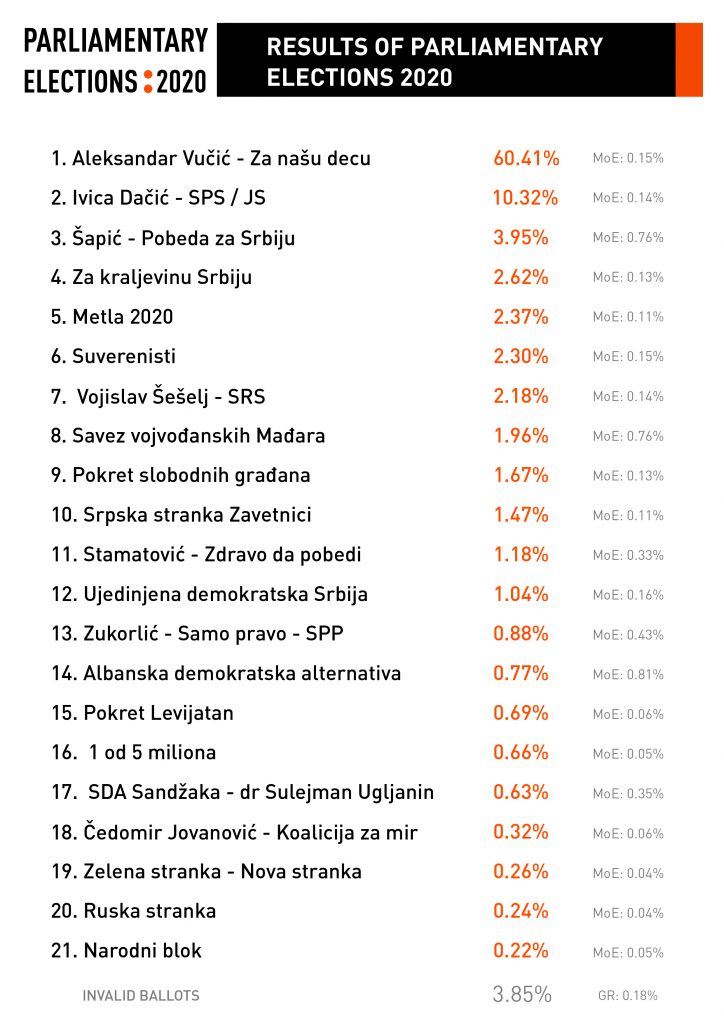
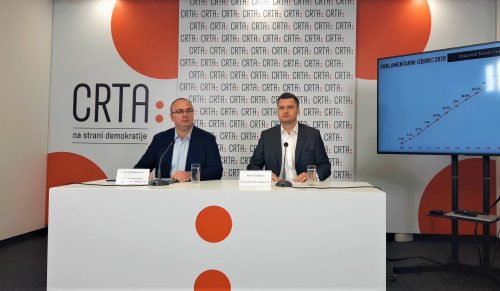
The Elections for Members of Parliament were held on June 21, 2020

2018
The Elections for the Belgrade City Assembly were held on March 4, 2018
2017
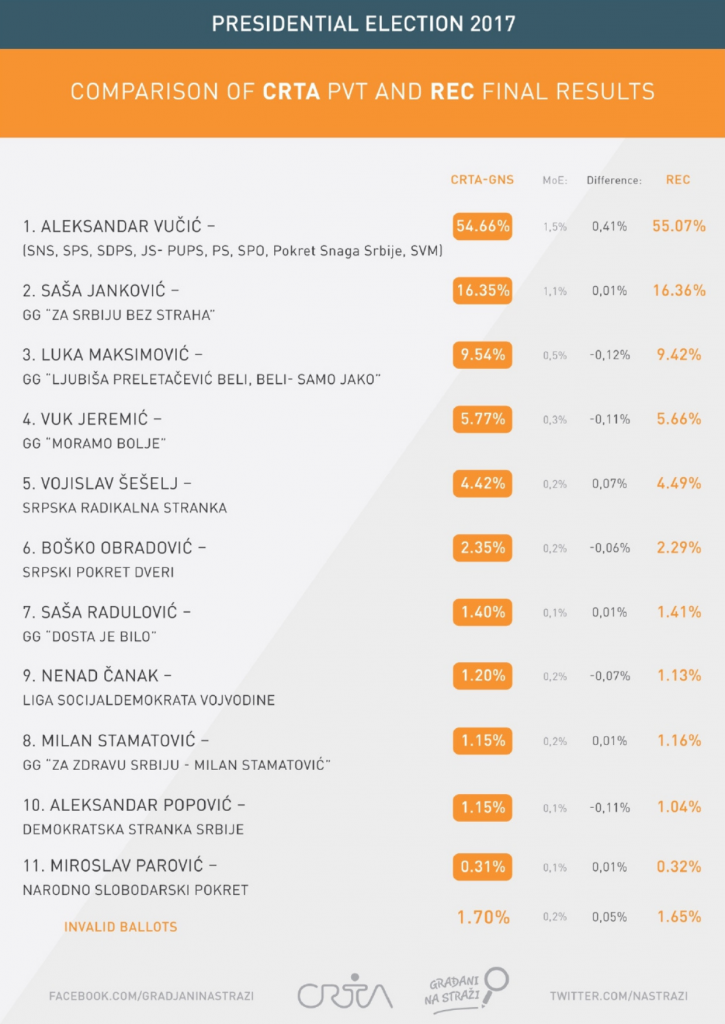
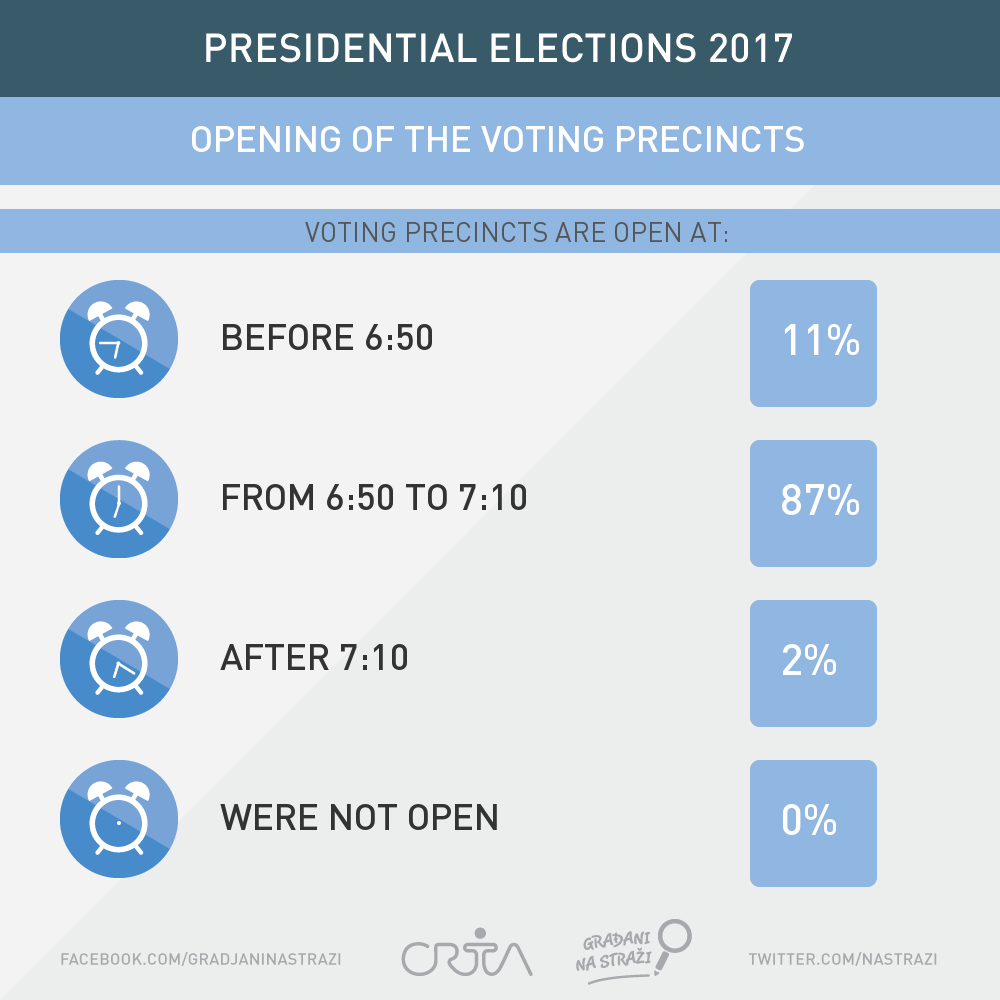
The Elections for the President of the Republic were held on April 2, 2017, across Serbia

2016
The Elections for Members of Parliament were held on April 24, 2016, along with provincial and local elections