


European Words or Deeds: Address by the Executive Director of CRTA to the European Parliament Subcommittee on Human Rights
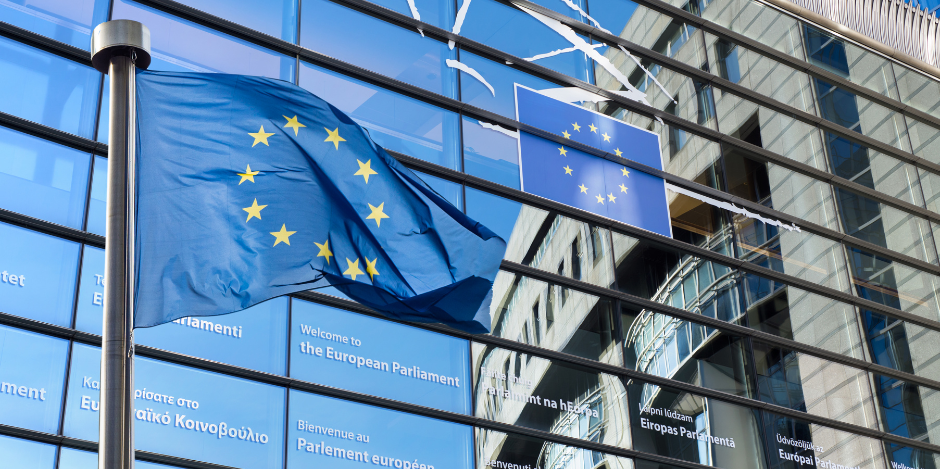 European parlament / Foto – Canva
CRTA addressed members of the European Parliament Subcommittee on Human Rights on Thursday, May 7, 2026.
Read the full address below
Dear Members of the European Parliament, distinguished guests,
It is an honour to be here with you today, speaking on behalf of CRTA and sharing where Serbia currently stands with respect to human rights and democracy. We are speaking at a moment of deep institutional uncertainty, a year in which national elections may or may not take place, and, if they do, their integrity cannot be taken for granted.
Let me begin plainly: this is no longer a collection of isolated human rights violations. We are witnessing the systematic erosion of the conditions necessary for human rights and democratic participation.
This is no longer simply democratic backsliding. Violence is no longer incidental. It has become systemic. It is no longer a side effect of political power. It is becoming an instrument of political power.
First, the normalization of violence as a political instrument.
Violence in Serbia today is no longer sporadic. It is patterned, tolerated, and increasingly without consequence. It targets citizens, activists, journalists, students, and election observers. The response of those in power goes beyond passivity. At times, it creates the impression of tactical encouragement.
In such an environment, violence becomes a message. And the absence of accountability becomes part of that message.
During the March local elections in several municipalities, a CRTA observer was physically assaulted after documenting footage suggesting electoral irregularities. In a separate incident, observers were prevented from leaving a clearly marked vehicle while police officers stood by without intervening.
These are not isolated failures of policing. They are signals about who is protected and who is not.
Intimidation today extends beyond physical violence. Women activists have been targeted through threats involving the non-consensual dissemination of AI-generated intimate material, a form of coercion designed to silence and exclude.
The Council of Europe’s Congress independently reported violence, heightened tensions, and the presence of unidentified groups contributing to an atmosphere of intimidation.
Across these cases, the pattern is consistent: reports are filed, investigations stall, and accountability disappears.
This is a continuation of what we witnessed on the streets in the past year: excessive use of force, hundreds of violent incidents at protests, degrading treatment of protesters, smear campaigns, coordinated disinformation, and the use of a sonic device against a protest of more than 300,000 citizens. Repression has entered every pore of our society.
Second, the systematic breakdown of the rule of law.
Impunity is no longer merely the consequence of weak or slow institutions. It has become an active, conscious decision.
In two serious cases of violence against students, one involving a broken jaw and another a student struck by a vehicle, those responsible were granted presidential pardons.
The message was unmistakable: justice applies selectively.
This logic of selective justice is now at risk of being consolidated institutionally. Amendments to judicial laws further weaken prosecutorial autonomy and narrow the space for independent action in politically sensitive cases.
Both the Venice Commission and the European Commission have warned that these changes deepen existing systemic vulnerabilities.
Serbia continues to formally align legislation with European standards while key ODIHR recommendations remain unimplemented.
The problem is no longer the absence of norms. It is the absence of political will to apply them.
Third, the destruction of the last spaces where dissent remains possible.
What we are witnessing did not begin yesterday. It is the latest stage of a gradual process of state capture that began more than a decade ago and has moved methodically through institutions capable of producing accountability.
It began with the security apparatus, stripped of parliamentary oversight. It continued with the weakening of independent oversight bodies and the dismantling of political actors capable of genuine competition.
Over time, the information space was brought under political control through pressure on independent media, capture of broadcasting infrastructure, and the growing dominance of loyalist and state-aligned actors.
Civil society organizations followed, targeted through smear campaigns, financial pressure, and institutional harassment.
Until recently, universities remained among the last genuinely pluralistic spaces in Serbian society — autonomous by law, occasionally willing to be vocal, and still capable of defending the public interest.
That is precisely why they have become a target.
The police raid on the Rectorate of the University of Belgrade was not an aberration. It was the next logical step in this sequence.
This was not without precedent. More than a year earlier, armed police entered the premises of civil society organizations, including CRTA, without clear justification, seizing thousands of documents.
In neither case was there a meaningful legal outcome. The intention was not investigative. It was intimidating.
When this logic reaches universities, what is at risk is no longer only institutional autonomy. It is the survival of critical thought, dissent, and civic courage themselves.
From the perspective of those living this reality, several things matter.
Violence cannot disappear from public attention once headlines fade. Independent election observation must receive clear and consistent support. Continued engagement with civil society, academic communities, and those defending democratic standards in Serbia remains essential.
For more than a year and a half, students, universities, citizens, journalists, and human rights defenders have faced pressure, violence, and institutional targeting not because they broke the law, but because they refused to remain silent in the face of its violation.
What is at stake today is no longer only the protection of individual rights. It is whether democratic societies still retain the capacity to defend the spaces where dissent, accountability, and critical thought remain possible.
Europe still matters in Serbia. But its credibility will depend on whether democratic values are defended not only rhetorically, but in practice.